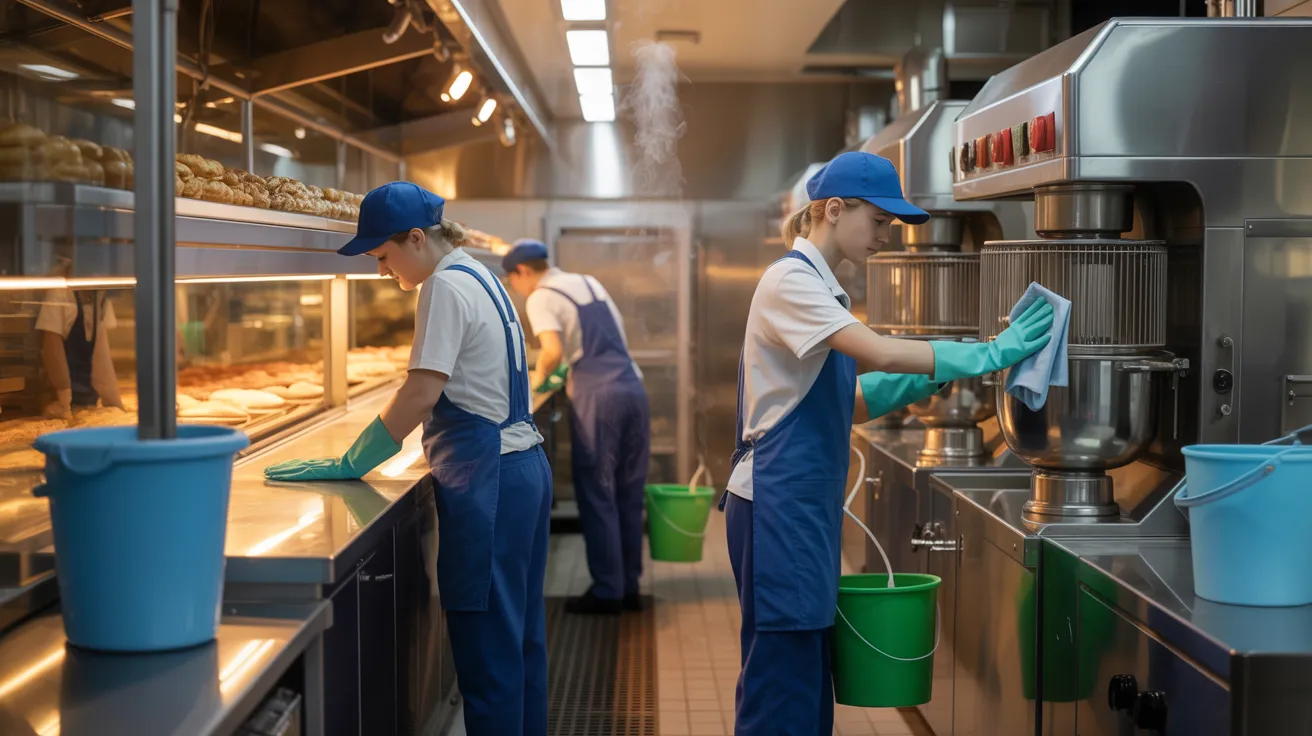
Food hygiene and professional sanitation experts in Brampton support your business in maintaining dining venues, food supply centers, bakeries, warehouses, and food service units in compliance. They disinfect high-touch points, food preparation zones, equipment, floors, drains, restrooms, and food handling zones using certified sanitizers, proper dilution, and recorded contact times.
Essential Summary
- Brampton's food safety cleaning technicians clean for restaurants, grocery departments, commissaries, warehouses, bakeries, schools, mobile vendors, and allergen-sensitive operations.
- They disinfect high-touch surfaces, food-contact equipment, kitchens, floors, drains, restrooms, and storage areas using zone-based workflows to eliminate cross-contamination.
- Validation of proper chemical concentration, appropriateness, and contact time is performed by qualified specialists, with completion filed using swabs, reviews, and corrective-action records.
- Routine, periodic, and periodic duties distributed by section constitute sanitation calendars built on danger, throughput, switches, accidents, and guidelines.
- Prioritize contractors demonstrating hazard analysis knowledge, sanitation knowledge, WHMIS preparation, insurance, references, coded instruments, and audit-ready maintenance records.
Food Safety Cleaning Requirements for Brampton Facilities
Brampton establishments that deal with, maintain, prepare, package, or provide food require sanitation protocols. Implement it if your facility is subject to health reviews, food regulations, or HACCP protocols. The rule covers eateries, dining facilities, warehouses, supermarket areas, meat counters, fish departments, retail outlets, and institutional kitchens.
Compliant food safety cleaning proves essential in distribution centers, manufacturing facilities, cold storage areas, bakery retailers, educational meal programs, banquet venues, and meal delivery services. Temporary mobile establishments are included, like catering trucks, festival vendors, and pop-up food booths. Your location needs established hygiene documentation if your team handle raw materials, divide prepared dishes, warm meals, or keep allergens stored. In Brampton, food safety is not discretionary; it forms part of statutory, functional, and public health adherence.
What Do Brampton Cleaning Experts Clean?
Your facility requires professional cleaners who sanitize all high-touch areas, cooking and food prep areas, all floor types, and restrooms for food safety and health code adherence. These zones receive attention due to their elevated cross-contamination potential, hazardous walking conditions, and violations of hygiene standards.
When you know their cleaning scope, you can verify that your facility's cleaning scope meets operational and regulatory requirements.
High-Touch Surface Cleaning
Brampton cleaning services stress high-touch surface cleaning due to the danger of bacteria, viruses, and food residue transmitting across your space. You must have a documented schedule for cleaning all high-touch items including handles, plates, switches, railings, control surfaces, POS systems, and refrigeration equipment. Implementing touchpoint mapping, professionals pinpoint every regularly used point and assign cleaning timing
Maintaining a one-way cleaning method, replacing cloths, and dividing cleaning tools by zone ensures that protocol stays documented, defensible, and compliance-ready at all times
Cooking Zones, Walking Surfaces, and Restroom Environments
Brampton cleaning services zero in on kitchens, floors, and restrooms as each zone presents distinct food safety, accident, and public health concerns. In industrial kitchens, you need degreasing on cook lines, equipment exteriors, drains, prep surfaces, and splash zones to reduce bacterial growth and pest activity.
Documented floor maintenance is likewise provided as part of the service.
For restroom sanitation, cleaners sanitize high-touch surfaces, bathroom fixtures, stall dividers, supply dispensers, and trash receptacles, then replace products and reduce odor. They also maintain restaurant cleaning supply rooms where product storage, sink cleanliness, and drain systems impact daily sanitation standards and worker protection.
How Food Safety Cleaning Benefits Brampton Operations
To comply with health code requirements and pass inspections, Brampton facilities must maintain appropriate cleaning protocols. You also reduce cross-contamination by cleaning and sanitizing food-contact surfaces, equipment, and high-touch areas correctly. Most importantly, you help protect community wellness by reducing the chance of food poisoning in your establishment.
Health Code Compliance
Since Brampton food operations must follow rigorous sanitary regulations, your sanitation practices directly influences your ability to meet health codes, protect diners, and sidestep regulatory penalties. You must maintain sanitized food contact points, written maintenance records, safe chemical management, and documented employee protocols that meet municipal and provincial inspection expectations.
Inspectors review your operation to confirm that your hygiene protocols maintains protected inventory management, machinery hygiene, waste handling, and bathroom upkeep.
Cross-Contamination Prevention
Adhering to regulatory guidelines requires your expertise in stopping cross-contamination throughout daily food handling and cleaning. You need to isolate uncooked items from finished products, clean prep surfaces between tasks, and keep chemicals away from food-contact items. Organized systems minimize contamination events and maintain ongoing regulatory adherence.
You might establish allergen separation to stop main allergens from reaching shared surfaces, containers, or equipment. Use dedicated cutting boards, color-coded tools, and rigorous tool identification so staff don't mix items throughout cooking or delivery. Mandate handwashing after handling raw meat, seafood, eggs, or allergen-containing products. Change wiping cloths regularly, and test disinfectant concentration using strips. When employees learn these procedures every shift, you develop a more sanitary, secure business that meets Brampton's food safety expectations daily.
Public Health Protection
If proper sanitation declines, you don't merely risk a failed inspection—you boost the probability of foodborne illness harming customers, staff, and the broader Brampton data area. You also weaken your role in protecting public health, especially in high-traffic food premises where pathogens travel quickly through surfaces, equipment, and touchpoints.
You require sanitation protocols that eliminate soils, sanitize properly, and confirm effectiveness. This involves adhering to exposure times, utilizing approved disinfectants, documenting procedures, and instructing staff to meet regulatory standards. These mechanisms support disease prevention by decreasing microbes before contaminating food or surfaces. Across Brampton, strong cleaning safeguards vulnerable groups, limits outbreak risk, and demonstrates accountability. When you follow standards, you go beyond requirements—you meaningfully reduce risk and enable safer food service throughout the area.
In What Ways Does Cleaning Help Achieve Food Safety Compliance?
Committing to thorough cleaning protocols underpins food safety compliance by decreasing contamination threats, preventing pathogen multiplication, and maintaining your facility's adherence to sanitation requirements under HACCP-based programs and public health regulations. You confirm that product-contact areas stay visibly clean and microbiologically controlled, supporting documented preventive controls and inspection readiness.
Cleaning initiatives additionally amplify allergen prevention by removing residues that can cause undeclared allergen exposure.
How Do You Arrange Commercial Cleaning Work?
cleaning routines or between shifts wherever food-contact areas, restrooms, and high-contact zones
special events, catering services, or public functions ought to arrange cleaning both [[before and after for successful event transition. Log timeframes, verify that work is completed, and adjust schedules if hazards, volumes, or regulations change
Selecting the Right Brampton Cleaning Experts: Key Considerations
Begin by evaluating providers based on food-safe sanitation requirements—not solely on price alone. You should confirm that each organization comprehends CFIA, public health, and HACCP-based requirements applicable to your facility. Request insurance certificates, WHMIS compliance, staff training documentation, and oversight procedures. Assess whether technicians recognize cross-contamination risks, chemical handling protocols, and verifiable sanitation records.
You must also evaluate business consistency and oversight. Seek references from Brampton food companies, then assess response speed, corrective-action procedures, and communication quality. Ensure the company supports supplier audits and can provide inspection-compliant records when authorities or third parties demand verification. Verify equipment is maintained, color-coded items are deployed correctly, and site-specific hazards are understood. A reputable service protects compliance, product integrity, and your brand reputation.
What details should a sanitation plan include?
Establish a documented program that establishes every sanitation duty, standard, and accountability ahead of production commencement. You should list cleaning frequencies, approved chemicals, dilution rates, contact times, tools, and verification methods for each zone, surface, and piece of equipment. Make sure to include pre-operational inspections, corrective actions, and employee training requirements.
Your framework should also include cross-contamination controls, waste handling, pest-prevention measures, and documented schedules for restrooms, drains, floors, and food-contact areas. Specify how you'll distinguish raw from ready-to-eat operations, help with ingredient tracking, and maintain accurate allergen labeling through validated cleaning between product changes. You should establish accountability, maintain signed records, and check results against regulatory standards, HACCP controls, and customer requirements. When gaps appear, adjust procedures immediately and retrain staff.
Regular Asked Inquiries
Do sanitation providers work during overnight shifts at Brampton properties?
Yes, you can book cleaning services to manage overnight shifts in Brampton facilities. You'll organize overnight sanitation around production schedules, access controls, and staffing requirements. Services generally map nightshift procedures to reduce disruption, ensure compliance, and document completed tasks. You should verify response times, supervision, access protocols, and disposal methods before beginning service. If you operate regulated spaces, you'll also want cleaning records that support inspections and compliance verification.
Are emergency spill response solutions available from Brampton cleaning experts?
Yes, you can locate several Brampton cleaning professionals offering emergency response services. They manage hazardous materials, assess dangers, isolate zones, and perform swift decontamination to minimize risk and prevent disruption. You should confirm timeframes, certifications, safety measures, and procedures. If your facility must meet standards, choose a service that logs events, follows procedures, and ensures verification.
Are environmentally safe disinfectants safe for food-contact surfaces?
In essence, green disinfectants function safely for surfaces contacting food provided you choose solutions certified for food use that meet compliance requirements. Check contact times, dilution rates, and rinsing needs ahead of deployment. Botanical formulations decrease chemical hazards, although you require confirmation of performance against target microorganisms. To preserve residue-free conditions, stick to manufacturer directions precisely and ensure the sanitizer satisfies food sanitation requirements.
Do maintenance plans support seasonal variations?
Yes, you can customize cleaning plans for seasonal variations. You should revise frequencies, labor allocation, chemicals, and testing procedures to match operational cycles while upholding regulatory compliance. You'll decrease equipment downtime by timing sanitation around equipment transitions, maximum output, and equipment use patterns. You should additionally update procedural documents, staff education, and environmental monitoring to address transient threats, novel allergens, or increased soiling. Periodic assessments keep your strategy effective.
Will professional cleaning services train employees on hygiene best practices?
Certainly, commercial cleaners coach your staff on hygiene protocols. You obtain employee development on proper chemical use, contact times, contamination control, equipment disassembly, and documentation. They generally coordinate instruction with HACCP, GMP, and CFIA or local public health standards. Many also run health assessments to verify compliance, identify gaps, and strengthen corrective measures. This enables you to maintain consistent procedures, pass inspections, and minimize foodborne pathogen risks daily.
Closing Remarks
Through working with Brampton food safety and commercial cleaning specialists, you accomplish much beyond organizing—you ensure your facility for inspections and your procedures meet requirements. From production floors to kitchens, all clean areas and organized zones reduce contamination risks and prevent significant costs. Through scheduling maintenance on suitable timelines and adhering to a comprehensive cleaning program, you safeguard your team, your patrons, and your good name. In a tightly controlled regulatory landscape, proper sanitation cannot be considered optional—they are fundamental to success.